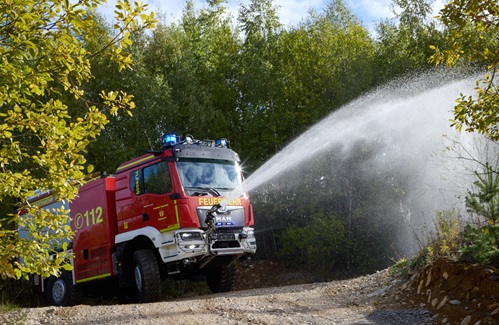
Emergency vehicles must reach their scene reliably and safely, even in the event of large-scale fires in difficult terrain.
More and more summers with record heat and weeks of drought: forest and vegetation fires pose special challenges for fire brigades worldwide. With the new MAN TGM 18.320 4x4, MAN is offering a chassis for firefighting applications in the highest off-road category in accordance with DIN EN 1846-1 for the first time. The 18-tonne chassis with permanent all-wheel drive is specially designed for operations off paved roads. Special protective measures and equipment prepare the vehicle specifically for operations in forest and vegetation fires. With its high payload of up to 11.5 tonnes, tank firefighting vehicles with up to 6000 litres of extinguishing water and 500 litres of foam concentrate plus standard equipment can be built on the MAN TGM 4x4 chassis.
The vehicle is powered by a 320 hp engine. Power is transmitted by the MAN PowerMatic automated transmission. The individual 14.00 R20 tyres on the front and rear axles support off-road capability. Depending on the body and cab variant as standard or double cab, different wheelbases and crew concepts can be implemented.
For operations near sources of fire, the chassis has a special heat protection device. Air, electrical, AdBlue and fuel lines are designed in such a way that they can withstand a temperature of up to 130 degrees Celsius for a period of ten minutes. In addition, there are mechanical protective measures for particularly exposed vehicle components.
A hinged roof hatch between the driver's and front passenger's seats opens up additional application possibilities. A height-adjustable tread surface makes it easier to use the hatch and supports the crew when observing the surroundings or working from the cab. Even with the roof hatch, the cab meets the latest ECE R29-3 crash test standard in order to provide the occupants with the best possible protection, even in the event of serious accidents.
The vehicle concept also enables extinguishing while driving according to the "pump and roll" principle. This allows the crew to fight fire areas along paths or during slow off-road driving.
One of the key features is a tyre pressure control system that can be controlled from the driver's workplace. This allows the driver to adapt the tyre pressure to different surfaces and operating conditions. The system is supplemented by a tyre pressure monitoring system and run-flat tyres. These make it possible to move the vehicle out of a hazardous area in a controlled manner, even if the tyre is damaged. With its water passage capacity of up to 950 millimetres, the vehicle can also be used on flooded roads and farm roads.
The high level of off-road capability is supported by further technical adjustments. These include a mechanical protective cover for the transfer case and an exhaust tailpipe raised behind the driver's cab. At the same time, the optimised entrance situation makes it easier to access the crew compartment. The extensive modifications to the TGM 4x4 were implemented by MAN Individual in cooperation with ESTEPE, the specialist for cab modifications and chassis adjustments.
With the new MAN TGM 18.320 4x4, bodybuilders and fire brigades have a versatile basis for vehicles for forest and vegetation firefighting. The concept combines a high level of off-road capability with special protective measures and flexible options for cab, crew and body. Source
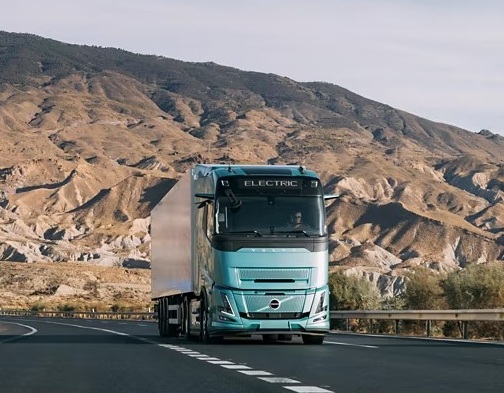
This includes the Volvo FH Aero Electric with extended range – capable of driving up to 700 km (435 mi) on a single charge.
In April 2026 Volvo launched its new generation of electric trucks with improved performance, flexibility and ranges up to 700 km on one charge. Now the first trucks have rolled off the assembly line in the factory in Tuve in Gothenburg. The production start marks a major milestone for electric truck transport. With the new Volvo FH Aero Electric and the next-generation Volvo FH, FM and FMX Electric models, electric transport is a viable solution for a significantly larger share of transport assignments than ever before.
The flagship of the new range is the Volvo FH Aero Electric with extended range. Thanks to a new e-axle technology, the truck can accommodate significantly more battery capacity and drive up to 700 km (435 mi) on a single charge. Combined with megawatt charging capability and high payload capacity, it enables electric transport on routes that have traditionally relied on diesel trucks.
The new truck range also includes the next generation of Volvo FH, FM and FMX Electric models. These trucks feature an all-new electric driveline designed to improve energy efficiency, productivity and driving performance, with driving ranges of up to 470 km (293 mi).
The new electric trucks will be produced at Volvo Trucks' manufacturing facilities in Tuve, Gothenburg, Sweden and in Ghent, Belgium. Volvo Trucks is a global leader in electric trucks and offers one of the industry's broadest electric truck portfolios. The company electric truck offering of 8 models covers a wide range of transport assignments including urban distribution and waste management, regional and long-haul and construction. Source
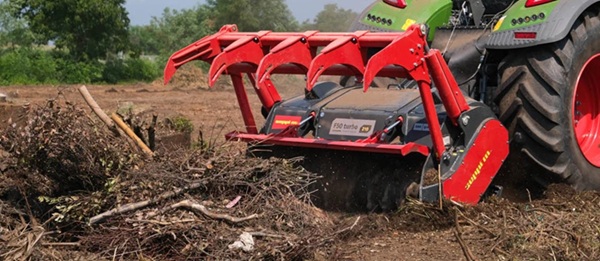
This is the evolution of the Starforst, developed for professional forestry mulching applications with tractors.
The new model introduces a series of updates and technical solutions affecting the machine frame, cutting rotor, drive system, tractor connection, and wear components. With working widths from 210 to 260 cm (83 to 102 in), the F50 turbo is designed for tractors with power ratings from 200 to 360 hp (147 to 265 kW). The rotor can be equipped with 63-77 V-Lock tools, while machine weight is around 3,400 kg (7,496 lb), depending on configuration.
The F50 turbo features a frame made from S420 steel, designed to provide high strength and durability for forestry work. Internal wear components are made from AR400 wear-resistant steel; the complete shell around the rotor is bolted on and can be replaced easily when worn.
The machine is also equipped with five rows of replaceable Counter Cutters to ensure the best shredding quality. The casing has an attractive and functional design, well-sealed against the entrance of debris and dust during work, but in case of maintenance easily accessible to reach the interior. The sharp looking vent covers for the M-Turbo clutch make the Seppi M. recognizable from far.
The F50 turbo rotor comes standard with Mini Duo V-Lock tools, designed to be used in the usual land clearing application. For big diameter material, such as stumps and large-diameter wood, the machine can be equipped with the high-density rotor OPT 578 Mono Hit V-Lock tools where it develops a higher productivity.
Special lateral tools called Extreme V-Lock, in combination with the Duo Defender, protect the rotor on the extremes, where the wear conditions are always severe. One of the key features of the F50 turbo is its hydrodynamic coupling, which provides a smooth and progressive rotor start-up and decouples engine and rotor in the event of excessive power demand.
M-Turbo helps to protect the tractor from torque peaks, by absorbing impact loads caused by sudden stumps and hard material. The tractor will never stall. It is very important that Seppi M. offers this solution also with a 210 cm (83 in) working width, that stays within the 255 cm (100 in) overall width for road transportation.
The guide skids have also been redesigned. They are individually adjustable to several positions and feature a new replaceable wear sole, to minimize the cost of the wear exposed components. Source
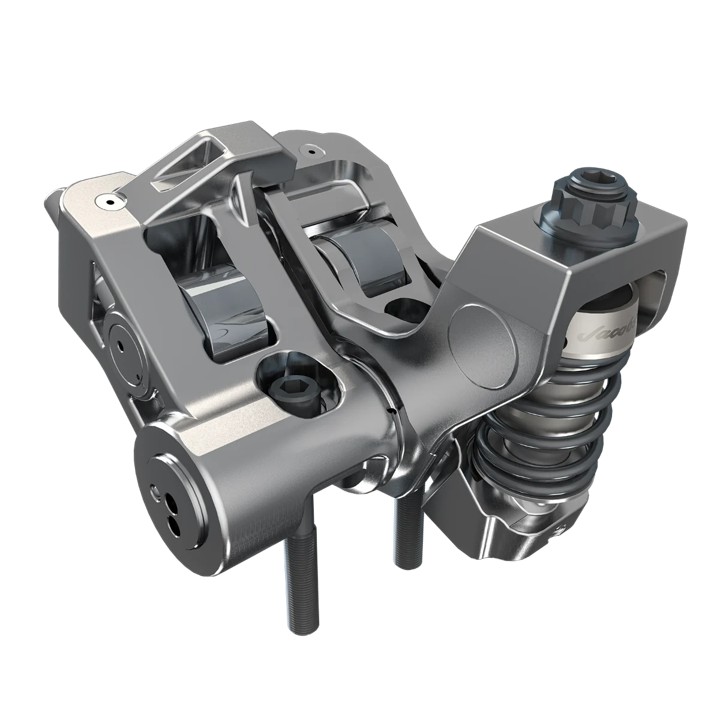
Designed to deliver faster engine braking and more fuel-efficient brake-assisted gear shifting.
The patented wedge capsule hardware, available on the crosshead, rocker arm and pushrod valvetrain components, is behind the company's decision to develop its first-ever mechanical engine braking system. It is an alternative to the high-pressure hydraulic chamber used in conventional compression release engine braking systems.
Removing the hydraulic chamber from the system improves brake response time by up to 60% without any loss in capability. It reduces an average 300-350 millisecond duration for slab brakes, and around 250 milliseconds for rocker brakes, to less than 100 milliseconds in the Cummins X15 engine.
For OEMs using automated manual transmissions (AMTs) with engine brake-assisted gear shifting, wedge capsule technology extends the performance envelope. The 100-millisecond response of the wedge capsule shortens the brake activation window, reducing vehicle speed droop and the fuel penalty associated with re-acceleration after gear engagement.
The wedge technology uses a two-step actuation mechanism that protects the system when a partial engagement event occurs, a known failure mode in other mechanical engine brake designs that use single-actuation pin lock systems. When partial engagement occurs, the wedge geometry limits load transfer to approximately 30% of full actuation force, preventing component damage. The system also requires no crank angle-based activation control, simplifying integration for OEM engine management calibration teams.
Another benefit is the elimination of hydraulic compliance: in hydraulic systems, oil compressibility under high valve loads results in lift loss, which must be compensated through additional cam lift. A mechanical load path removes this variable entirely.
On the X15 engine, wedge capsule technology is deployed in the compression release engine braking system, where it will deliver the highest total braking power in its class. On the X10 engine, the technology is integrated into the Jacobs® High Power Density® (HPD®) engine braking system, where two capsules are used, one for cylinder deactivation (CDA), and the other for braking activation. The X10 engine will deliver the highest specific braking power in its class. Source

Community project transforms a formerly sealed urban site into a climate-resilient tiny forest.
Stihl is launching a special project at its founding location in Stuttgart. Over the coming months, a highly biodiverse, densely planted mini forest will be established on a site replacing an area that is currently largely sealed. In addition to improving the local urban climate, the project aims to promote biodiversity and increase the quality of life in the city district.
Tiny Forests are small, densely planted forests created around the world based on the established and recognized concept of the Japanese botanist Akira Miyawaki. They can be created in urban areas equivalent in size of around two to three tennis courts. Predominantly native trees and shrub species are planted on nutrient-rich soil. Dense planting encourages natural competition among the plants and enables comparatively fast growth. After a development and maintenance phase of about four years, the result will be a diverse, resilient ecosystem that is largely self-sustaining over the long term.
Tiny Forests make an important contribution to climate adaptation, especially in densely built-up city districts. In addition to promoting biodiversity and improving the local microclimate, Tiny Forests increase the soil’s water retention capacity and help counteract the urban heat island effect. These benefits are complemented by the creation of new habitats and green spaces where both wildlife and local communities can flourish.
A new, high-quality soil structure will ensure that the plants can grow well. According to the plans, the site will feature three planting areas with connecting pathways, along with a central seating area designed as a welcoming space to relax. Source
Tigercat welcomes Blain MacDonald back to the company as Regional Product Support Representative for the Canadian Prairies and Colorado
Blain returns with more than a decade of experience supporting Tigercat dealers and customers. His extensive product knowledge, hands-on field experience, and strong industry relationships make him a valuable addition to the Product Support team. Source
Change in Kesla Plc’s Management Team
Kesla Plc has appointed Tuomo Salo (Bachelor of Science, EMBA) as Vice President, Sales and Customer Experience and a member of the Management Team. The appointment strengthens Kesla’s commercial leadership as the company pursues growth in international markets. Salo will assume his position no later than December 2026 and will report to CEO Pasi Nieminen, who has been responsible for the role on an interim basis since June 2026. Source
Read More“Forest biomass harvesting operations’ costs and production rates in the Florida Coastal Plain: a case study of two sites”
International Journal of Forest Engineering, 2026. Yu, A., Daniel, M. “Jo,” Chasuk, L., Gallagher, T., Pokharel, M., Cristan, R., … Parajuli, M. Source
“Artificial intelligence–based detection of forest road surface distress using UAV imagery”
International Journal of Forest Engineering, 2026. Savadkouhi, A., Najafi, A., & Vahidi, J. Source
Read MoreTo see the full list of international logging, roading and trucking conferences and expo’s, please click the “Events” tab at the top of the page.
Read More