John Deere began integrating industrial robots into manufacturing facilities in the 1980’s.
If you walk through a John Deere factory today, chances are you will see robots at work. They weld. They paint. They move parts. They inspect quality. And in many cases, they make work safer and easier for the people around them. That is not new. For nearly four decades, John Deere has been using automation and robotics across its manufacturing operations with one goal in mind: help their teams build high quality machines safely and efficiently for customers around the world. What is new is the form some of those robots are beginning to take.
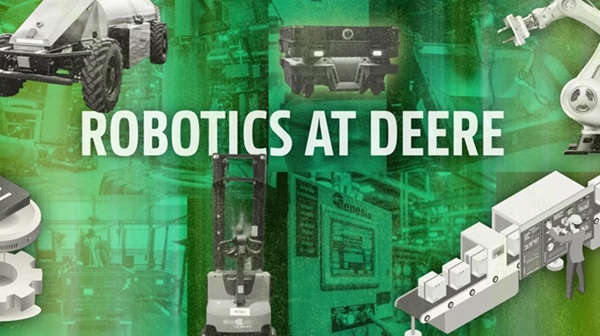
John Deere began integrating industrial robots into manufacturing facilities in the 1980s. Since then, robotic systems have quietly become a normal part of factory life, from robotic weld cells to automated guided vehicles and inspection systems that support consistent quality. Rather than replacing people, Deere’s approach to automation has consistently focused on supporting them, particularly in highly repetitive, physically demanding, or ergonomically challenging tasks.
Manufacturing environments are designed for humans. Tools, walkways, shelving, and workstations are all built around the way people move and work. That reality is what makes general purpose, human shaped robots an interesting area of exploration. Instead of redesigning entire factories to accommodate a single purpose machine, these robots are built to navigate spaces that already exist.
In the near term, those use cases are expected to be practical and limited. Think material movement, ergonomically challenging tasks, or dynamic inspection work. Not skilled assembly. Not replacing craftsmanship. And not working independently of people. Any exploration of new robotics at Deere starts small, with testing, learning, and clear guardrails. New technologies are evaluated for how they fit into real factory environments and how they help team members, not just what looks impressive on a demo floor.
As part of that learning mindset, John Deere is actively exploring and evaluating work with emerging robotics companies to better understand how humanoid robots could complement existing automation in the future. These evaluations are exploratory and focused on learning and understanding how advanced automation can further improve quality and efficiency in manufacturing. Source