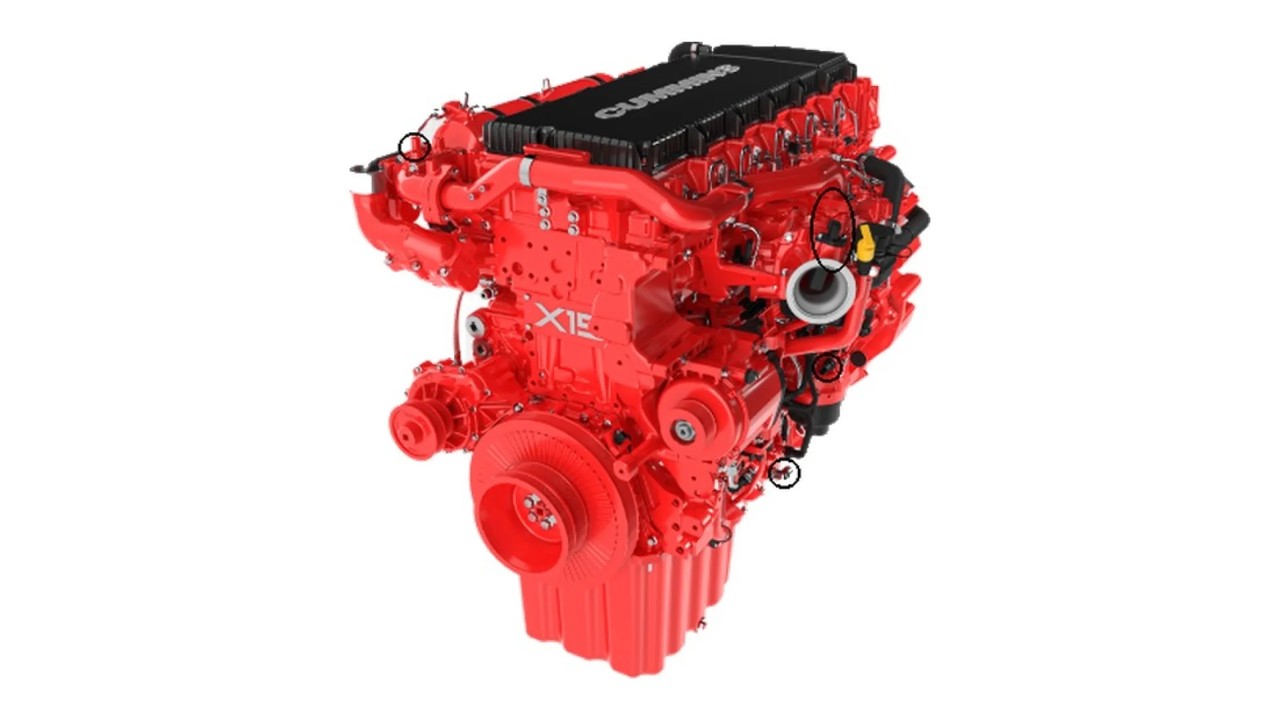
The sophisticated network of sensors and control units that function as the nerves and brain of an engine system.
Sensors collect information and provide data to control units. These control units are programmed to compare that data against the optimal operating parameters of the equipment that the sensors monitor. Based on the information provided, the control units can signal actuators to adjust a component’s operations as needed, ensuring each part is operating appropriately.
Data from sensors can help engine systems comply with regulations on safety and pollution and can detect potential failures that could cause significant damage to a vehicle, preventing vehicle problems and more costly maintenance down the road.
Put simply, sensors optimize vehicle performance. Whatever the powertrain—whether diesel, natural gas, fuel cells, or batteries—sensors monitor, manage, and improve performance.
Commercial vehicles use sensors to monitor pressure, temperature, emissions, fluid quality, airflow and engine speed. These sensors provide real-time data that help electronic control systems optimize performance, reliability, fuel efficiency and emissions compliance.
Given the complexity of modern engines, a variety of sensors work together to ensure they perform correctly. While customers may see a sensor by its function, such as a pressure sensor or temperature sensor, the technology inside can vary significantly depending on the application, supplier design and operating environment. In general, engine sensors can be divided into a few main categories, including sensors for monitoring pressure, temperature, flow, level, speed or position, chemical composition and fluid properties.
- Pressure Sensors: Measure absolute, gauge, and differential pressures. In an engine, applications include oil, fuel, and exhaust manifold pressures.
- Temperature Sensors: Monitor the temperatures of liquids such as oil, coolant, and exhaust gases.
- Flow Sensors: Measure blowby flow, mass airflow, and exhaust gas recirculation (EGR) flow.
- Level Sensors: Detect levels of oil, coolant, and urea.
- Speed/Position Sensors: Track engine speed, cam position, turbo speed, and vehicle speed.
- Chemical Sensors: Detect exhaust NOx, O2, ammonia, particulate matter, and fresh air humidity.
- Fluid Property Sensors: Assess oil quality, coolant quality, and fuel condition.
Depending on the fuel source, the types of sensors installed will vary based on the conditions the engine needs to monitor, the environment those sensors are operating within, and the levels of accuracy or functionality the sensors need to meet. For instance, natural gas engines need oxygen sensors, while diesel engines require NOx sensors. Regulations have also added to the types of sensors powertrains need, specifically around aftertreatment and for onboard diagnostics.
The information provided in this article is provided by Cummins. Source